
Why hard work is losing its brand
There is something deeply stirring about a rocket launch. Watching NASA’s Artemis program gear up to put boots back on our lunar cousin feels like a rare moment of collective human endeavour. You see the smiling faces, the decades of work coming good and the displays of the best of us that are becoming rarer and rarer, as the public sphere becomes more and more private. I have always loved space programs in all forms. Granted, it is all a bit boys’ toys and a showcase of power and vanity but that is not why it grabbed my attention. I love it, but because it is hard. Even if the first Moon landing was faked it is still the ultimate expression of trying hard till it works. Artemis was a multi decade, multi-billion-dollar bet that the struggle to overcome the impossible is what defines us best as humans. Artemis is about the raw grit of engineering our way out of our own atmosphere. Breaking the boundary that physics set for us.
The same day that Artemis circled the dark side of the Moon, we had a US President jump the shark posing as Jesus in a fake social post. It was also the day that the pioneer of our constant consumption economy QVC the shopping channel filed for Chapter 11 bankruptcy. It was literally created to complete the modern version of the American dream, shopping as entertainment. No longer able to compete with other digital versions of this from Temu to TikTok it is no longer with us. If NASA represents our highest aspirations of effort, QVC was a cathedral of our hubris. It was representative of the buy now, pay later life that has led us all to this moment in history where our bills are all coming due at once. The promise that we can improve our circumstances instantly today by borrowing against the promise of tomorrow. It is a 1960s concept that has been directed away from gaining inner spiritual belonging to one of consuming in a life devoid of challenge. We are all unfortunately worse for it.
I was just at Lake Louise in Canada with my eldest daughter so she could learn to snowboard. She was in snowboard school for most of our trip, so I was solo lifting and the awkward third wheel on most chairs. I often asked my fellow travellers questions without warning. My main question was, where are you right now? As you can imagine, some took offence, some wrote me off as weird chair lift guy, but most leaned into the question. My takeaway was people were on many different journeys, but they all had a similar motivation. A bit of physical risk in a world where we are cuddled and disconnected from natural forces. Ski hills are the ultimate gilded cage where your run costs are if you are lucky pushing $500 per day so not drawing conclusions but it did strike me that our promise of a life improved without the sweat, delivered in four easy instalments to your couch, is playing a large role in the disillusionment so many have with modern living. Perhaps we are all realising that you can’t actually consume your way to a sense of self. The road should be hard-fought versus easily bought.
The not-so-secret ingredient
One of the biggest enablers of human life moving from being defined by the limits of our own physical power is fossil fuels. Artemis didn’t leave our atmosphere powered by renewable energy. It took rocket fuel. Here in Australia we are particularly exposed to what is happening in the Strait of Hormuz. We are the highest users of diesel per capita in the world and in our pivot from manufacturing to higher value services we have lost much of our domestic refining capability to make it. Hence Albo running around Asia with a fire under his ass until a fire in Geelong brought him home.
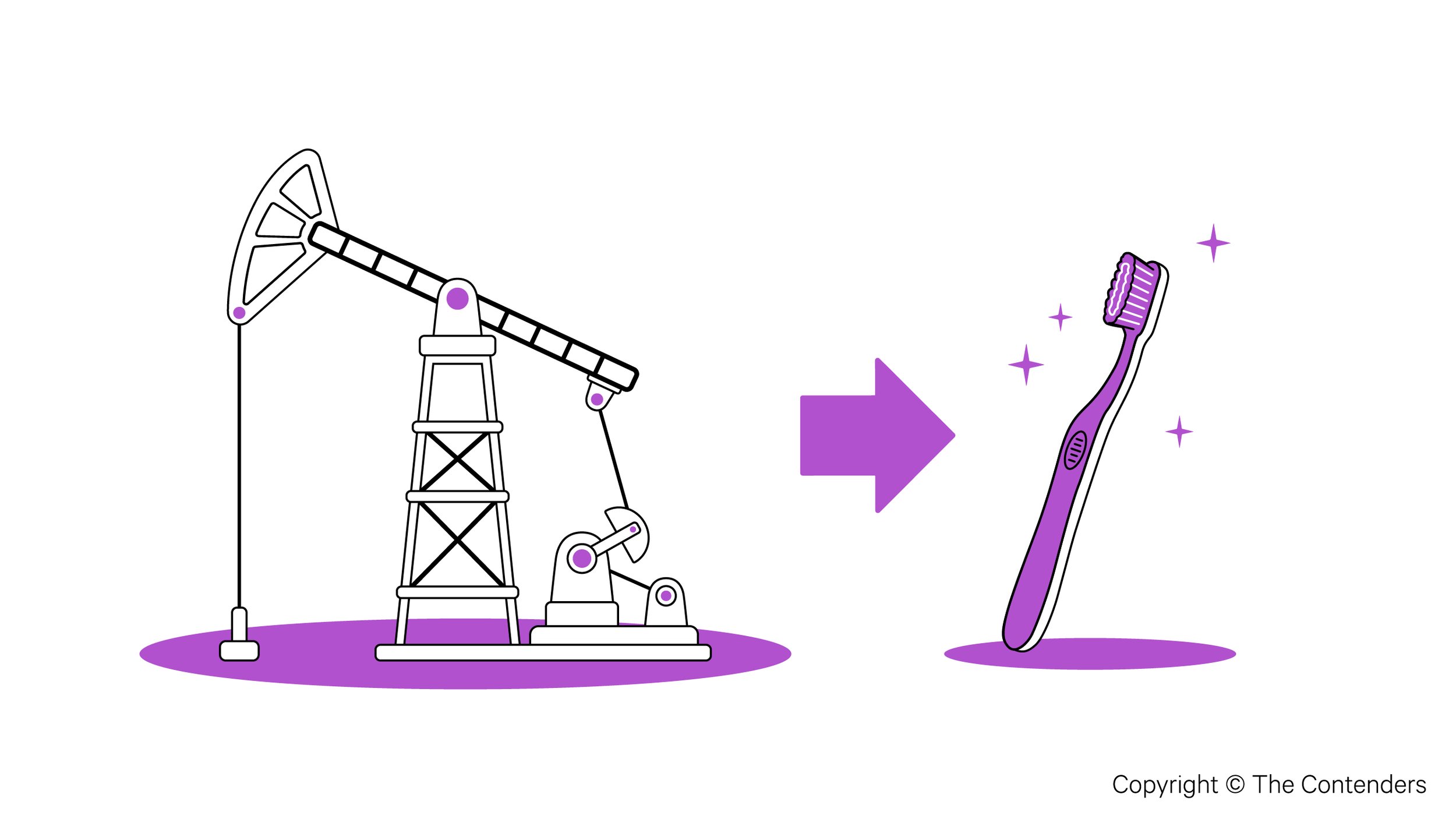
We often talk about the energy transition like it is just about swapping a petrol pump for an EV charger. But oil is the ultimate ghost in our modern machine; it’s in your toothbrush, the polyester in your athleisure, the water bottle you drink from and even the dental resin my surgeon used to fix my latest mishap. In Australia, the energy crisis isn't just a line item rising and rising on our household budget tracking app. It is a failure of our policy. In the short term, we are importing inflation because we have failed to bridge our own energy independence gap from coal to the minerals of the future. We have failed to make a bet on our future. We are one of the highest adopters of Solar so perhaps this crisis will drive another transition. The short-term challenge is to fight inflation, we are pushing up the cost of money leading to increased affordability issues. My overseas vacation will certainly be my last for a spell that is for sure.
In the medium term it is a tax on our lifestyle. We sit atop a geological savings account of iron and lithium, yet our economy pays full freight still for the privilege of keeping the lights on. Driven by the collision of a climate, demographic and technological crisis the result is that the everyday Australian life we all bought into is more expensive and less affordable for more and more people. In the long term we are heading to the same place countries like the UK and the USA find themselves. Spending way more than we can ever hope to pay back.

The small business blender
One of the frontlines of this struggle is the local high street or business park. Since the pandemic, small businesses worldwide have been shoved into a high speed blender. In Australia, firms with fewer than nineteen people are currently in a stealth recession where they are closing in record numbers. It is a size that no longer fits it seems. Traditionally these businesses made money through physical acts of service ranging from making food to fixing leaks to helping people through professional services. ABS data shows that while non employing businesses (sole traders) grew while those with 1 to 4 employees declined by 0.7% and those with 5–19 employees showed zero growth in FY25. This starkly contrasts with large companies (200+ employees) which grew at 2.6% during the same period. Smaller gets smaller and bigger gets bigger is a recurring theme in our polarised world. A recent Institute of Public Affairs report titled Small Business Sector in Crisis explicitly identifies a net loss of nearly 33,500 small employing businesses (those with 1–19 employees) between June 2022 and June 2025. This represents a cumulative 3.5% decline in the total number of small businesses.
The culprits? It is not just the Rona hangover. It’s the soaring cost of the energy we use and the tech stack we need to reach the audience. The digital toll we pay to platform monopolies like Meta and Amazon just to stay visible. When the restaurant you love closes, it’s often because the bank and the delivery platforms ate the Friday night margin before the chef even turned on the stove. It is a sad reality that does not get the airtime it deserves. I worry what it means for a society already breaking at the seams. These types of businesses are important because of what they represent. In a way a small local representation of the Artemis spirit; of taking a chance, backing yourself and working hard to make something happen. It’s a crisis of societal meaning because small business has always been the physical definition of the hard-work-equals-reward contract.

Branding the grind
Historically, the best brands were built on the spiritual altar of effort and endeavour. From the mainstream of Bunnings, where the handwritten signs and cardboard boxes say we try harder to save you cash more than a glossy ad could, to the more boutique RM Williams, which was built on the myth of the bushman’s graft (that we now wear to board meetings to signal we haven't forgotten our roots). Other brands also own the struggle as their core positioning and it has worked. ‘Built Ford Tough’ is an asset that has allowed them to survive even their worst product missteps into electrification and smaller cars. Patagonia didn't start with saving the planet they started by making gear for climbers that would not break when their life depended on it.
Salaries are for suckers?
But we are entering a weird new era. In the Autonomy Age the return on labour has been eclipsed by the return on capital. Our new brands from Polymarket to Revolut to Kalshi to Robinhood are based not on hard work but more digital-age notions of insight, winning, premonition and inside tracks. When kids see crypto traders supposedly making millions in their pyjamas, the idea of doing the nine-to-five grind starts to look like a scam. Salaries are increasingly seen as for suckers and an outdated concept. Of course this is about as true as Ford actually building tough things. I broke an F-350 (the really tough one) as a kid loading it with too much grass FFS.
For brand builders, this is the challenge of our age. Do you really buy that these new norms are actually reflective of a change in values? If the traditional narratives are dying, and what replaces them is not true, to what do we anchor a brand? Most brands base themselves on a twist on a universal human belief like meritocracy, belonging and security, but even these are being challenged. Perhaps the best way to express this is, what is true is what has changed, not what we all believe. For me, today’s mass personalisation has led to mass alienation. We all still believe what we always did but we can’t share it with others anymore.
Building a brand in this fractured world requires more than distinctive assets, it requires a distinct stance. Not in a political sense but in a permanent sense. Defining who you are and where you are at so that you attract rather than promote.
In the end, in a world promising easy, maybe promising friction is the way. Maybe that is the answer… by providing some type of friction that ensures the audience has to perform alongside you. But if we want to survive the Autonomy Age we would all be well-served by remembering that judgment, taste and physical endeavour are the talents the machines can’t yet fake; try as they might.
—
Be better to each other.