
When productivity becomes the new currency
Transitions are costly and, in a world awash with debt, this one could be rougher than most. In life if you hit a financial set back you tend to do budgeting 101. You re-set, you lick your wounds, recover and move forward. At a societal level we just lived through this post Covid. Most trimmed the sails, reduced the spend on life’s little extras and now that costs have kinda reached a new equilibrium, and houses are going up in value, you feel like there are sunnier days ahead. They likely are but there are also some stormy clouds on the horizon.
Why? Our share market is being driven by a belief that is going to come up against the closest that capitalism has to an off switch…a constraint.
The constraint hiding in plain sight in the share market is the ability for AI to generate revenue. While Nvidia is still printing cash, those using the chips are not. Like other bubbles AI is not overhyped as a technology but it is overhyped in its ability to be quickly commercialised. Which AI company will become our version of Pets.com of the dot com boom and bust?
OpenAI is bleeding cash to build compute ahead of commercialising it and Antrophic is way out over its skis. No revenue model there. Google and Microsoft have bundled the tech into existing products to underpin already existing subscription revenue. Only incremental gains there. Specialist brands from Adobe to Canva in design and Xero and MYOB in accounting are turning AI into a competitive weapon that will generate lower average returns. Competitive advantage, yes, return on capital employed, No. Help us Productivity you are our only hope. That of course takes scale and that scale will cost trillions more in compute.
You can always sniff a bubble, as the key players start to seek out new sources of funding to plug the gaping hole in revenue. Open AI alone is short $577 Billion in revenue with a capital B. They also start to blame us. We become the bad guys stopping the true force for good from reaching its full potential. In the internet bubble it was the Post Office delivery times and slow dial up internet speeds. This time it is our slow adoption and lack of data processing. The second sign is more worrying. They are all starting to take on debt to fund themselves but the payback through revenue looks like my marks in my sophomore year of college, a long way from coming good.
There is no doubt that AI will usher in a new era that replaces the current internet-based way of doing things that, to use my fav new word, has become 'Enshitified.'
If you haven’t read or listened to Cory Doctorow who coined the term pontificate on how big tech is now too big to care you should. Links are below.
Our Mums and Grans learned the same lesson
Of course we have seen this before. From the railroads in the 1800s to automobiles late in the 1900s; from consumer credit in the 1920s to the consumer debt bubble of 2008, the fact that humans will fail to adapt as quickly to the new tool could actually remain undefeated. With AI it will not be different. It might be me, but it is still a bit crap to use and even if it wasn’t no one is building the sources of power it needs quick enough even if it was the best thing since sliced bread. It will come good but not before the inevitable crash. We always miss the point about what pops the bubble. We do. We humans deflate first as we realise that what looked like easy speculation is actually opportunity dressed as hard work.
The difference this time is of course the ability for our Governments to act as a backstop when it gets real. AI might be the future, but it also might break us like a gambler on his third day in Vegas. Our debt ratios in the western world have hit 250% of GDP. As the historian Niall Ferguson points out a high Debt to GDP ratio is the point when countries lose the economic and cultural dominance they once had. His works show that when debt replacements overtake spending on your military you are on an unsustainable path. America and many other advanced economies are already there.
Different bets on the future
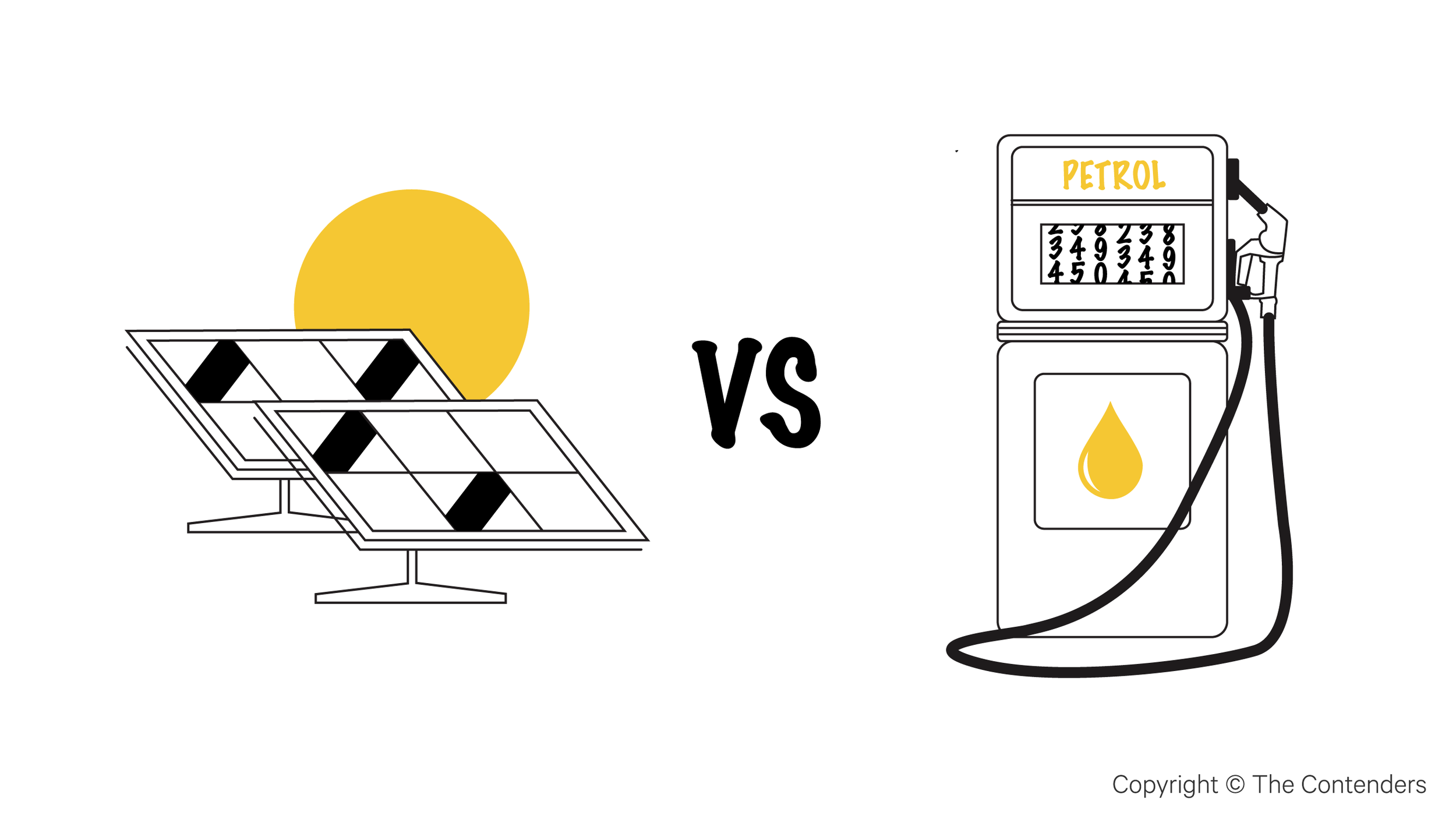
The engine of the world is pivoting, and our two major powers are making different bets on the future. China is focusing on building itself into a different type of superpower than the one it might be replacing. It is doubling down on how cheap clean energy is the key enabler of its future. In a strategic choice model, it has bet that creating the energy technology will be the key unlock for everything else. The United States is focusing on AI as that enabler and more legacy powered solutions required to power them such as nuclear and good old natural gas.
The race to the future is not just on, it is here and impacting all of us in ways we don’t always see. The future is faster, and our old ways are breaking at the seams. We can’t let go of the past until the future truly arrives. In the meantime, legacy industries are breaking as the monkeys in the middle and the communications industry is on the frontline of change. For an industry that has always caught and harnessed cultural change to create value for our clients we sure missed big on the speed of the swing away from human intelligence to machine intelligence.
It is important to note that the disciplines inside of the communications industry (i.e branding) have never been stronger, even as the traditional model of the industry that created them is in terminal decline. The industrial advertising complex that supported so many creatives backed by big budgets to grab big attention will be looked back on as dying the moment the internet was created. The skills are still highly in demand but the corporate structure that value captured their services is over.
The prescient book (and one of my all time favs) Networks and Netwars that was written by the RAND Corporation, posits exactly what we see today: that old style, top down command structures will break as more networked ways of working are more able to respond effectively. We see this across not just our industry but also in the clients we were built to support. The problem isn’t the brands above the door it is the model of the organisations behind them, that is not fit for today. The reason why is quite simple. ROI.

Are you the one actually paying the price?
Feel like you are running faster than ever? This is the reason. The average task done by the same unit of labour is increasing while the return to that labour is decreasing. Brands yesterday were built differently with more resources than they typically can be today. Why? because everyone had more margin to invest in their creation. Real margin left the world of physical goods from cars to food to the retailers selling them the second someone figured out how to bring in a digital layer to dis-intermediate it. It changed the dimension of competition and AI, while it will not be replacing us anytime soon, I think we can all easily see how it will create a different but just as disruptive way of competing to the one the internet created.
This era is not promising the freedom, social connection and access the internet era did. It is promising that fortune will favour the few.
—
Be better to each other.